Thesis Format Verification System
An automated web application designed to validate undergraduate thesis formats instantly using PDF parsing and validation engines.
Overview
The Thesis Format Verification System is a specialized web platform built for the Industrial Engineering department to streamline the thesis submission process. It replaces the tedious, error-prone manual checking of document formats with an automated PDF analysis engine, saving countless hours for both students and faculty members while ensuring strict adherence to university guidelines.
Key Features
- Automated PDF Analysis: Utilizes a Python (PyMuPDF) engine to programmatically extract and validate document structures, fonts, and exact margin sizes.
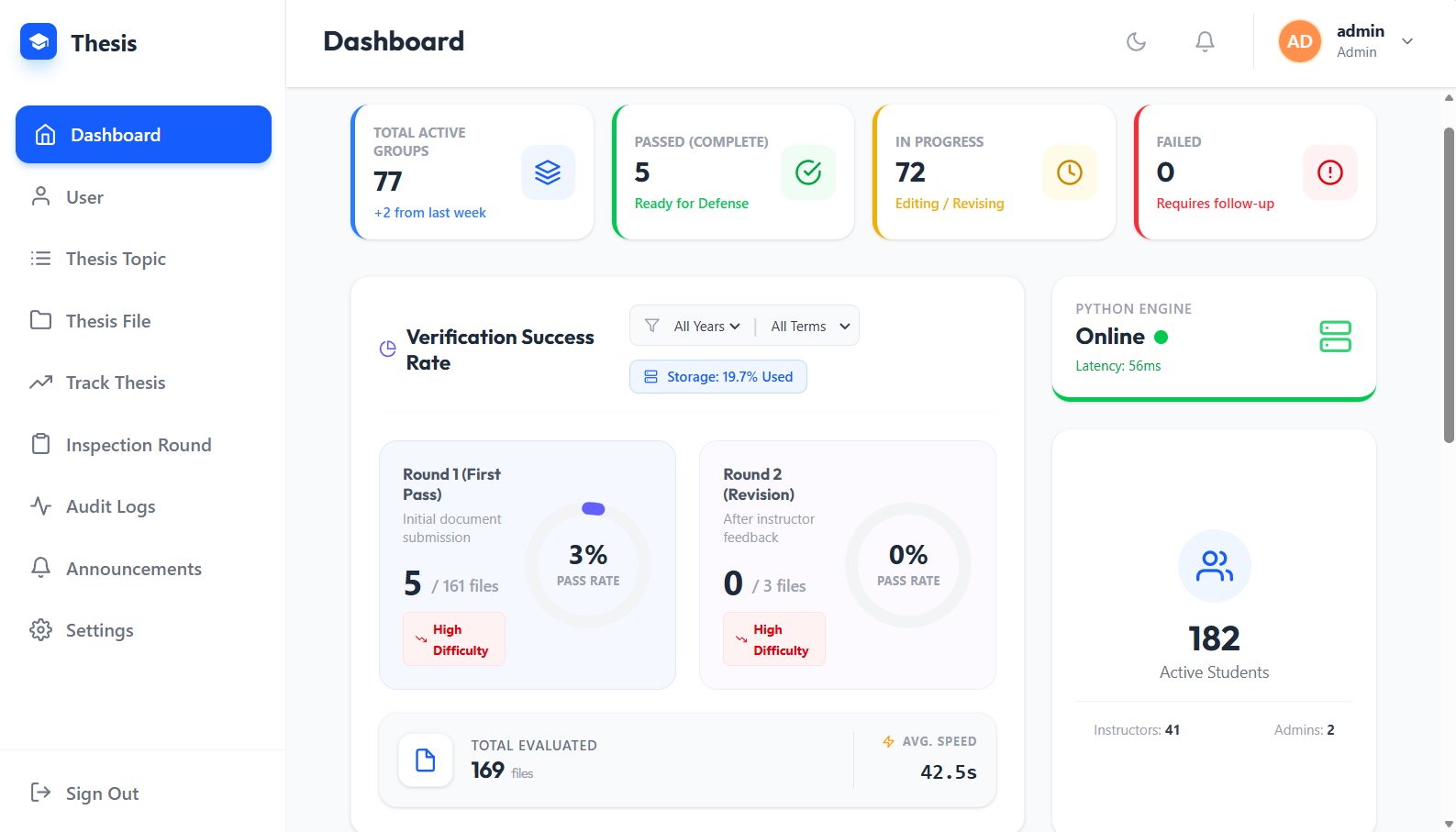
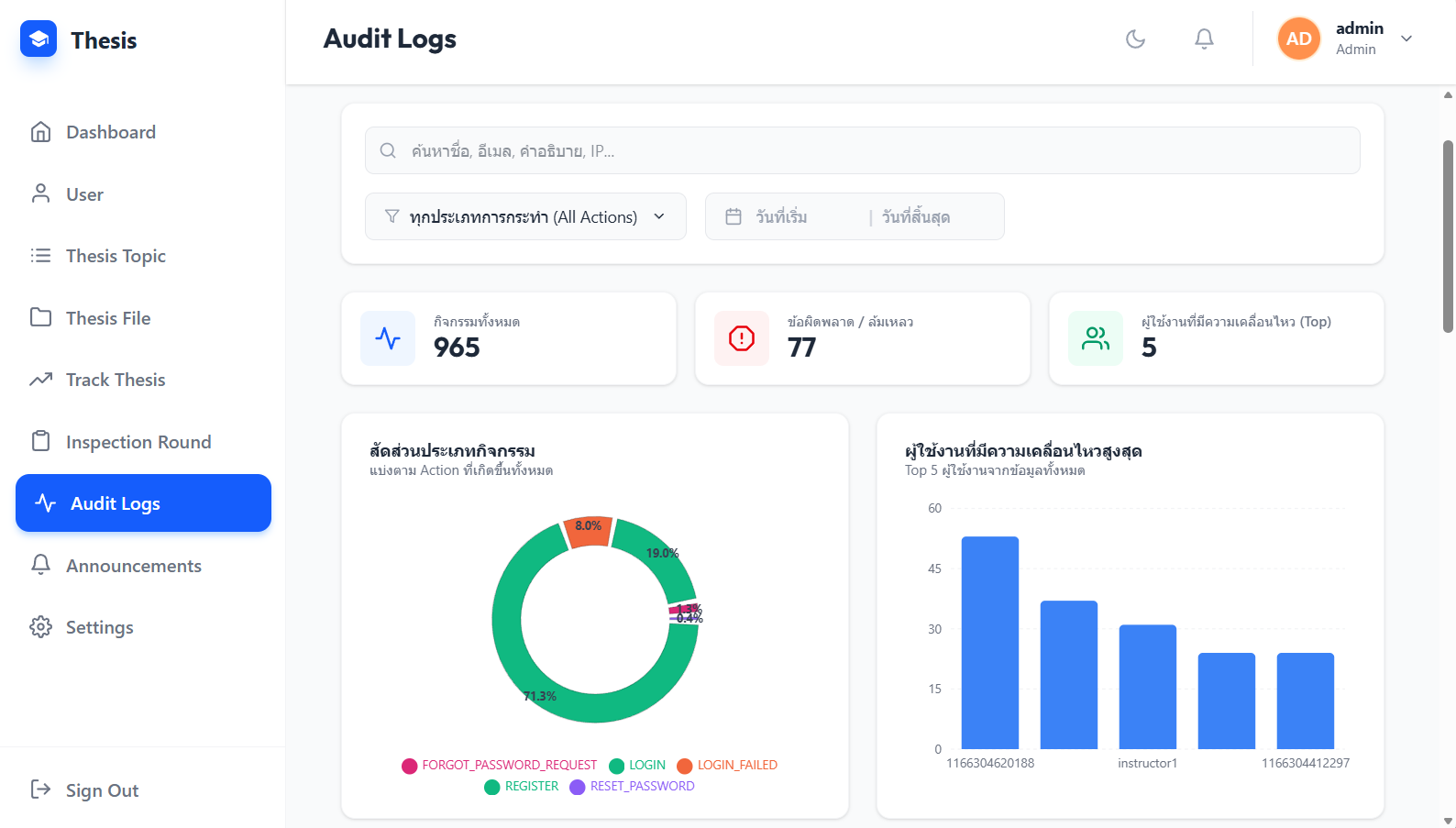
- Role-Based Access Control (RBAC): Provides secure, dedicated dashboards for Students to upload and track their thesis status, and Admins to manage rules and oversee submissions.
- Scalable Microservices Backend: Engineered with a robust NestJS API and fully containerized using Docker to ensure consistent and scalable deployments.
- Modern & Responsive UI: Developed a high-performance frontend using React (Vite) and Tailwind CSS, giving users instant visual feedback on formatting errors.
Challenges & Solutions
Challenge: Reading complex PDF structures and accurately measuring physical page elements (like exact margins, fonts, and line spacing) programmatically is notoriously difficult due to the unstructured nature of PDF files. Additionally, students needed to know exactly where their formatting was wrong, not just that it failed.
Solution: I developed a specialized data extraction pipeline using Python and PyMuPDF to deeply parse the document's internal geometry. By calculating exact bounding boxes and font metadata, the backend accurately flags formatting violations. This data is then seamlessly served via the NestJS API to the React frontend, allowing students to see precisely which pages and paragraphs require corrections before their final submission.